

NSF Certified · FDA Approved · USDA Compliant · Made in the USA
Beverage-Air 705-290C-02 Cutting Board 48″ x 10″ Beverage-Air Refrigeration 705-290C-02
Original price was: $199.98.$173.95Current price is: $173.95.
Free shipping on all orders — same-day dispatch — made in the USA
Price valid this week — order before bulk pricing resets Sunday
1000 in stock
Create your own custom cutting boards with OEM quality.
Made from high-density polyethylene, these cutting boards are NSF, FDA and USDA approved, with superior resistance to staining, warping, chipping, and cracking.
They won't dull knives and are safe to clean in commercial dishwashers, so you can use them with confidence.
- MaterialHigh-Density Polyethylene (HDPE)
- CertificationsNSF · FDA · USDA
- Thickness options½" · ¾" · 1"
- OriginMade in the USA
- CareCommercial dishwasher safe
Free shipping on all orders, dispatched the same business day when ordered before the daily cutoff.
30-day returns on eligible stock items. Custom-cut sizes are made to order — see our Shipping & Return Policy for details.
STEP ONE — COLOR
Stop Cross-Contamination Before It Starts
HACCP programs and many local health codes use color-coded cutting boards to separate raw proteins from produce and cooked foods. Use this chart to build a cleaner kitchen board set.
White
General use — dairy, bread, general prep. The default board for non-protein kitchen tasks.
NSF COLOR STANDARD — GENERAL PURPOSE
Yellow
Raw poultry — chicken, turkey, duck. Dedicated board prevents cross-contamination with other proteins.
NSF COLOR STANDARD — POULTRY
Red
Raw beef and pork — steaks, chops, ground meat. Most commonly used board in high-volume butcher operations.
NSF COLOR STANDARD — BEEF & PORK
Blue
Raw seafood — fish, shellfish, crustaceans. Required separation from land-animal proteins under HACCP.
NSF COLOR STANDARD — SEAFOOD
Green
Fresh produce — fruits, vegetables, herbs. Keeps plant-based prep away from raw meat surfaces.
NSF COLOR STANDARD — PRODUCE
Tan
Cooked meats — sliced deli, roasted proteins, smoked items. Prevents recontamination of ready-to-eat foods.
NSF COLOR STANDARD — COOKED MEATS / RTE
STEP TWO — SIZE
Match Board Size to Your Prep Station
A board that's too small slows your team down and creates unsafe overhangs. A board that's too large wastes space on a tight prep line. Use your prep table width to find the right fit in under 10 seconds.
Salad Station / Garde Manger
Tight counter space, light prep volume, garnish work or single-service operations.
Standard Prep Table (15–24" wide)
Everyday prep line use. Fits most standard NSF prep tables without overhang.
Full Prep Station — Most Commercial Kitchens Most Popular
The industry standard. Fits a 24" prep table with room for mise en place on the sides.
High-Volume Line Station (30"+ tables)
For busy lunch and dinner services that process large quantities without board changes.
Butcher Block / Walk-In Processing
For dedicated protein break-down stations, catering prep, or bulk processing operations.
STEP THREE — THICKNESS
Choose Thickness Based on Volume and Knife Pressure
Thicker boards last longer under heavy daily use, but lighter boards are easier to clean and store in tight spaces. Match thickness to your service volume — not just your preference.
½" Standard
Light-volume prep stations, salad bars, garnish work, bakeries. Easy to store vertically. Good for low-impact cutting tasks where boards are swapped frequently.
¾" Pro
The commercial kitchen standard. Heavy enough to resist warping under daily use, light enough to handle and clean easily. Recommended for most applications.
1" Heavy Duty
High-volume operations, daily butchery, continuous protein breakdown. Absorbs heavy knife pressure and resists deep scoring that can harbor bacteria in lighter boards.
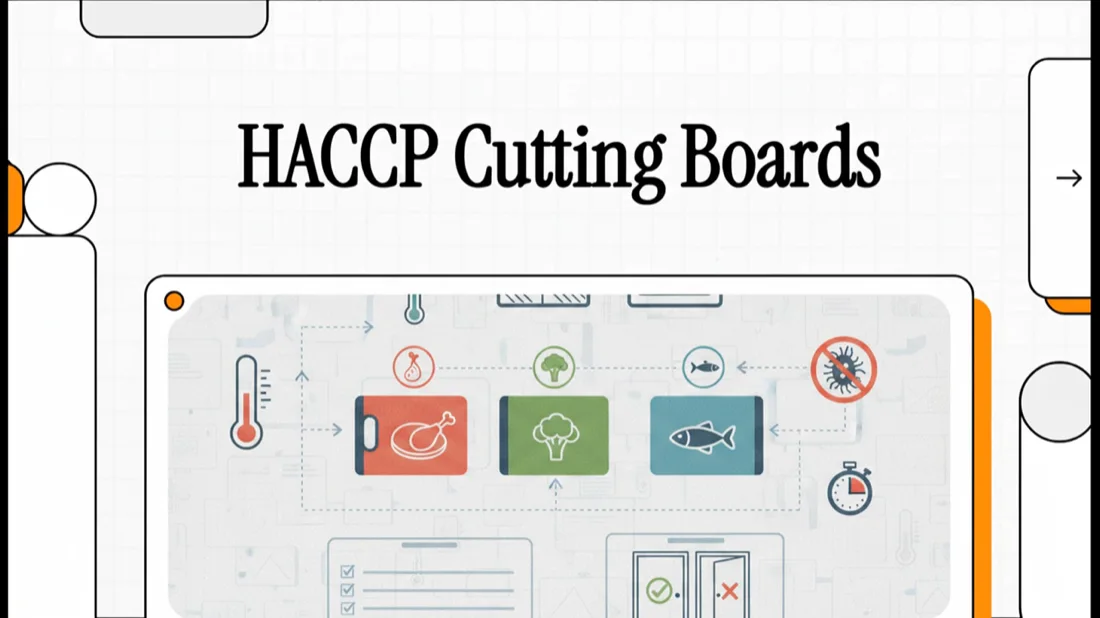
KITCHEN SAFETY
Why Color-Coded Cutting Boards Are Required — Not Just Recommended
Most health departments expect documented color-coded board systems as part of HACCP compliance. Train your team on color assignments, cleaning cycles, and replacement timing before inspections.
- NSF color-code standards explained